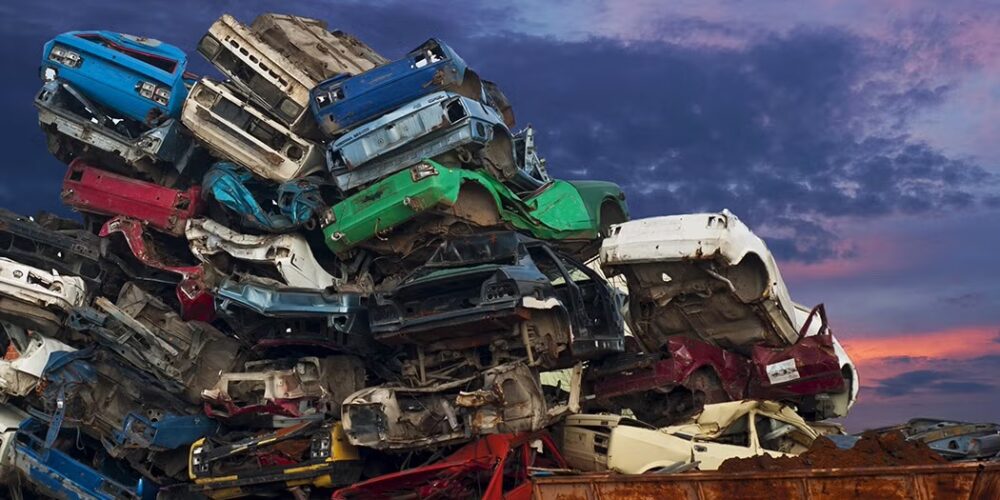



My first car was a 1990 Mitsubishi Colt, which I picked up for €500. Although I did not love it at the time, I have recently been reminiscing about it. With comfortable seats, an ergonomic design and a reliable engine, I even remember the smooth motion of the door as it closed. Why do I find myself recalling memories such as these? Because quality and longevity have become distant memories in the minds of those who manage production in the modern age. Profit has become the driving goal, supported by planned obsolescence and subscription services.
Enshittification was a term coined by the writer Cory Doctorow to define the degradation of online platforms. First, companies draw in new users with low prices or sign-up bonuses. Next, when people are locked into the service, advertisements rise and the user experience diminishes. Finally, the company removes value from the advertisers and other business partners, reducing it to a husk whose primary task is maximising shareholder value. This concept is most easily visible with Uber; it is their playbook as they roll from town to town, destroying the lives of taxi drivers.
Technology has been on a steady upward rise, so why are all the products and services in your life so feeble? Quite simply, quality has been purposely reduced while prices have been maintained or risen. So welcome to the new age of planned obsolescence, brought to you by the wonders of monopolisation and greed.
Market regulation is the basis for the meagre standards we have seemed to hold on to in the downward spiral of the free market, even though most rules become hollowed out by lobbying groups. The Tesla Cybertruck was (for some) the most anticipated release of the automotive industry in recent times. Oh, the wonders they promised while the stocks climbed! The pathetic result was unimaginative and loaded with mechanical and software faults, some of which were lethal.
My current vehicle has a general cheap feeling, an interior which seems as if a child put it together (for a lot of products, this is a possibility) and generally poor mechanical performance, which I have just come to accept as it has become the norm. Will I still be driving this vehicle in eight years? Will I still be wearing these shoes in one year? No. We have come to accept these standards due to how long planned obsolescence has been around. Ever since the Phoebus cartel lowered the life expectancy of light bulbs to 1,000 hours, we have been on a steady decline, bringing us to where we are today.
So where does this road lead? What happens when quality cannot be reduced any further and subscription costs cannot be raised any higher? We are already at that point, unfortunately. The consumer has been exploited for their data, purchasing habits, sleep schedules, location history and more. We are also witnessing monopolisation on an enormous scale. The majority of the products you pick up in the supermarket are now produced by P&G or Unilever. The competitive nature of the free market, the bastion of capitalism, is all but extinct. People are not fools; they now distrust new products and consumer confidence is at an all-time low. Second-hand markets have grown, and there has been a surge in interest in the right to repair.
Late-stage capitalism is here, and it is pitiful. Monopolisation, deregulation, commodification of the individual, geopolitical instability and ecological disaster. When we look back over these years, perhaps the soundtrack on Reeling in the Years could be an AI slop song?