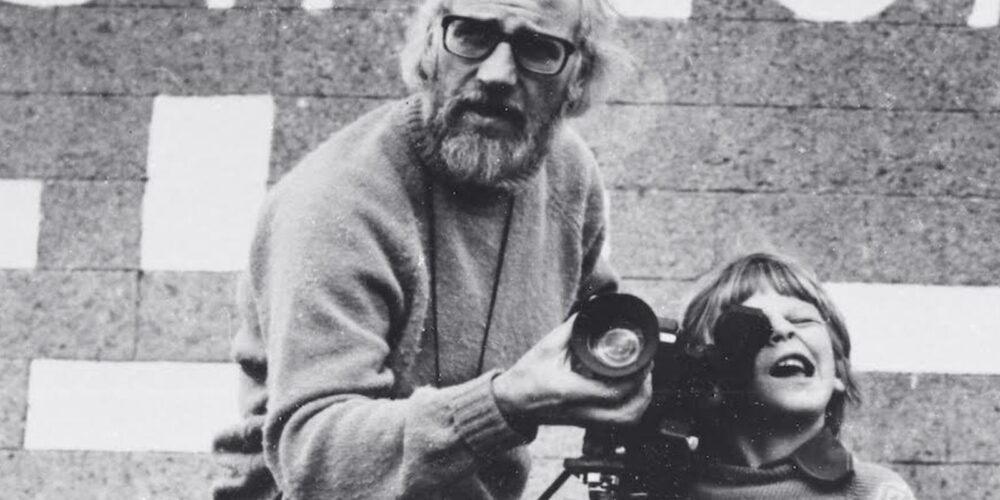



Bob Quinn was an Irish television producer who, after falling out with the RTÉ hierarchy in the late 1960s, found himself living the life of an artist in Connemara at a time when it was one of the most economically deprived regions in Europe, with a wife and young child in tow. From this inauspicious new start in his mid-30s, he was inspired by the then-emergent Gluaiseacht Cearta Sibhialta na Gaeltachta movement to begin pursuing, amongst other creative projects such as developing a thesis that the Irish were actually part of a pan-Atlantic civilisation and writing several books, the first efforts at Irish-language film and TV production at a time when there were very few films being made in Ireland. This selection of his written work from the 1960s to the 2020s, compiled by his son Toner Quinn, gives some indication as to the radicalism and prescience of much of his work, without which the present-day renaissance of interest in Irish-language film and music almost certainly wouldn’t exist.
Whilst these efforts can vary in quality and subject matter – Quinn’s innate contrarianism and confrontational style are entertaining to read, but occasionally lead to eccentric and hyperbolic arguments at the expense of outlining a coherent worldview – there is still a consistent emphasis on the parochial and specific as a counterpoint to the deeply commercial and centralised world in which we now live, in which cultural colonisation via the mass media has been a hugely effective means to spread the mass consumer society and steer Ireland and Irish people away from their proud tradition of resistance and solidarity with oppressed peoples across the world towards becoming just another part of the Global North.
As Quinn points out throughout these essays and letters, to say Irish speakers or those living in Connemara are “marginal” betrays a prejudice and arrogance on the part of decision-makers in government or broadcasting that has often seen the actual experiences of those who speak Irish as a daily language ignored in favour of symbolic initiatives which do little to meet their needs – like subtitled Irish-language television in a sea of British and American content. Ultimately, efforts which sustain the language and Gaeltacht communities come from empowering those directly involved rather than more generous handouts which merely acknowledge it.
In this, Quinn’s efforts and the thinking behind them – be they challenging the idea that films have to be in English by making his own as Gaeilge on minimal budgets with non-actors, or writing a totally new account of Irish history which pivots around maritime influence – can be read as a companion to Tomás Mac Siomóin’s more explicitly political work in The Gael Becomes Irish or The Broken Harp.
Reading these arguments in 2026, during a resurgence of enthusiasm for the Irish language amongst learners of all ages – as well as an increased awareness of its plight as a living language thanks to the efforts of groups like Tinteán, Banú and Misneach – is to see a vindication of sorts for Quinn’s Sisyphean efforts against impossible odds and frequent criticism.
Perhaps there is much to be learned from the ideas outlined here about the value of seeking inspiration from our immediate environment and circumstances, rather than creating inferior copies of what is already popular and taking direction from elsewhere, for how Irish creativity and activism (in any language) can find an independent voice in an age of ever-increasing Anglo-American cultural dominance and financial scarcity?