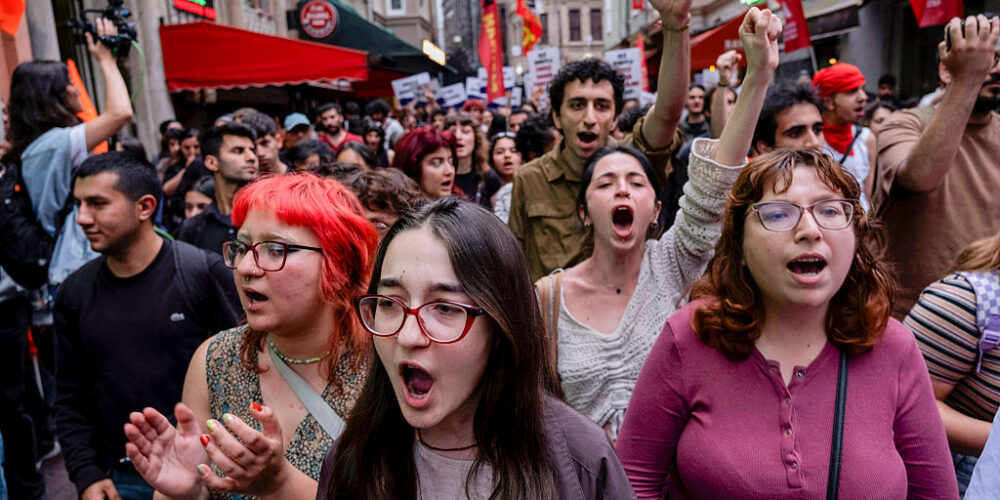



Fidel Castro asked the question: “You talk about the failure of socialism, but show me the success of capitalism.” The Gen Z protests spreading like wildfire across the world are the evidence that capitalism is not working for the majority of the people. The first wave of Gen Z protests, in Bangladesh, Sri Lanka and Nepal, showed that neoliberal policies are making life hell for Third World countries. Even though the immediate reasons may be specific to different countries, the underlying cause seems to be economic – unemployment, healthcare, housing, cost of living, etc. The second wave of Gen Z protests engulfed India, France, Spain, Albania, Belgium, Tunisia and others. The decades of austerity imposed on people by neoliberal policies have devastated the lives of many. The capitalist system never worked for the poor; now it is failing the middle class as well.
Every time an economic bubble bursts (tulip mania, dot-com to real estate), the crisis it creates is overcome by bailing out the big corporations and punishing ordinary people with austerity. The terrible conditions that austerity creates provide fertile ground for the right wing to flourish, as it uses rhetoric to gain popularity and to divert attention from a systemic crisis to immigration as the cause of all problems.
In France, the austerity measures imposed on people to repay the public debt reduced government spending on education, lowering standards across French universities and bringing Gen Z onto the streets.
In India, which boasts of being the world’s largest democracy, the Gen Z protests began with corruption in the education sector related to exam-paper leaks, with protesters demanding the resignation of the education minister; they then expanded into anger at the disenfranchisement of 130 million voters from the voters’ list in the name of Special Intensive Revision (SIR). The youngsters poured onto the streets to demand the resignation of the Chief Election Commissioner and to secure the most basic of rights in a democracy – the right to vote. It was a trigger for the underlying issues: every year in India, 5 million graduates enter the labour market. The youngsters are fed up with taking up gig jobs after qualifying, a situation compounded by the cost-of-living crisis, which makes life unbearable.
A tsunami of protest erupted in Spain when an 87-year-old woman died after being evicted from her home. The governments in power, bound by neoliberalism, absolve themselves of responsibility for providing the most basic of necessities, such as housing, to their people. Economists like Clara Mattei say that austerity is a counter-revolution and a class war unleashed by the 1% to take back the hard-won rights of the working class.
We are now on the verge of another bubble about to burst – the AI bubble. The AI tech giants claim that AI can solve all problems, such as poverty, climate change and unemployment. In fact, the eradication of these problems is not a technological issue; it is a political issue. In addition, they claim that AI is so powerful that it can pose an existential threat to the human species. Writers like Naomi Klein ask the question: if AI is so powerful, then why is it in the hands of a few private individuals who have no empathy and who do not hesitate to make money out of a genocide? But these extraordinary claims could be an exaggerated effort to inflate the AI bubble. Contrary to their claims, AI needs colossal amounts of energy and water for its data centres, increasing fossil fuel use and depleting water resources, which will exacerbate the climate crisis. AI will make many jobs redundant, deepening unemployment. In spite of all the funding, experts say that AI is unlikely to deliver on the promised return on investment. The bursting bubble will cause another round of austerity measures which will only intensify the Gen Z struggle for their future.
The events happening all over the world are an indication of the capitalist system in a cul-de-sac. The only option available to governments is to unleash violence on their own populations, as is evident in so-called democracies such as India, Italy, Germany and others. The fragility of bourgeois “democracy” is unveiled, exposing how swiftly they can morph into repressive regimes. The state violence against women, including sexual assault, is shocking, and all the slogans of liberty, equality and fraternity fall flat when weighed against ground reality.
This brings us back to the question Fidel Castro asked – SHOW ME THE SUCCESS OF CAPITALISM!!