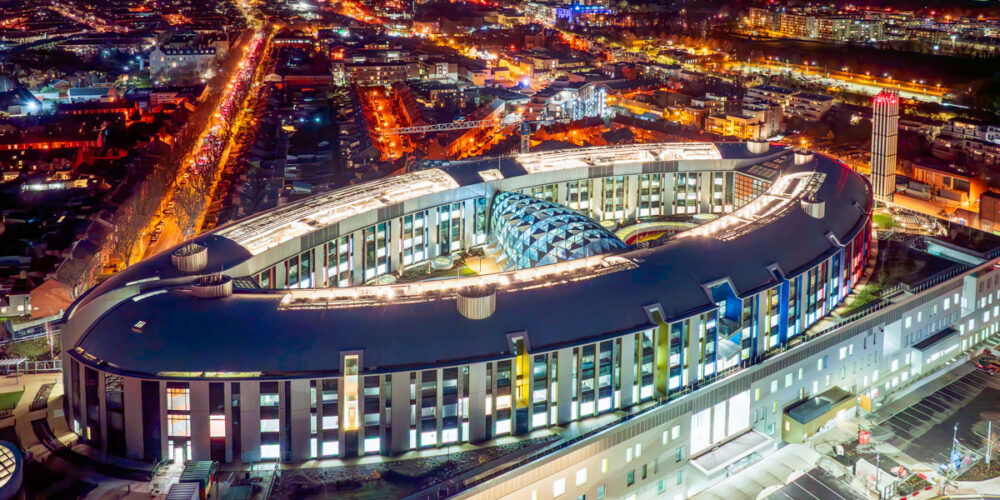



In recent decades, we have been no strangers in Ireland to corruption and inefficiency in the delivery of infrastructure projects. Be it a bike shed or a major hospital, no project seems to have the ability to come in on time and under budget. The investigations into the construction of the National Children’s Hospital have become a spectacular puppet show, with both sides pointing fingers at each other, all the while there is no one to take responsibility. Even when projects such as these are handled by skilled personnel, it is still a farcically inefficient process, with project managers and engineers on the sides of the vendor and client rifling through files and drawings in an attempt to increase profit by laying responsibility for costs on the other side. In this case, it seems that the government signed a contract lacking substance, which allowed BAM to lay the cost for every design change and higher-specification material at their door.
So how can we eliminate these inefficiencies? Some will tell you they are unavoidable: the uniqueness of these projects, the complexity of transaction chains and project scale will inevitably lead to delays and cost overruns. When we look at the delivery of major infrastructure projects in China, we see a different picture. Targets for efficiency, quality and cost are set, and they are met. Long-term planning allows concrete decisions to be made, whether in energy, transport or other infrastructure projects, and makes these decisions a national priority. While the West scours the globe for new deals, a country-wide major energy project is currently taking place in China, arising from an energy policy focused on moving away from coal while ensuring energy independence.
If we can leave the nuclear question aside for a moment, we see that China is currently producing nuclear power plants at a cost of $2 per watt, while America lags behind at $15 per watt. They understand that not every hospital must be a modern art piece, and you do not need to reinvent the wheel every time. Hualong One is China’s next-generation reactor, capable of generating almost 10 billion kilowatt-hours of electricity each year, enough to power the lives of around a million people in an average developed country. They currently have over 40 in operation or under construction, with construction times of up to 5½ years from initial concrete pour to completion, all while complying with IAEA standards. They have even signed a $4.8 billion deal to build a nuclear power plant in Pakistan, exporting the refined process.
The next jewel in our government’s infrastructure plan, the Dublin metro project, is estimated at €17.5 billion, with a track record that almost ensures it will soar even further. This steep rise from €9.5 billion in 2022 has been blamed on inflation, so who knows what the project has in store for the taxpayer. What is certain is that many construction tycoons and property developers are certain to make an impressive payday at your expense, thanks to the incompetence and cronyism of the Irish government. Only long-term planning and the nationalisation of our resources and utilities will lead to sovereignty and an efficient use of taxpayers’ money.