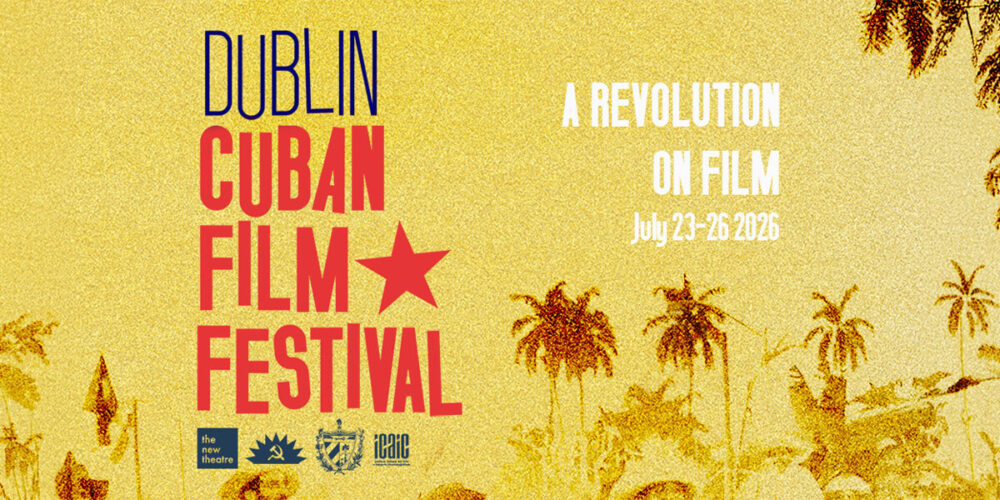
The Dublin Cuban Film Festival returns for its third year this July, screening at The New Theatre in Temple Bar and supported by the Communist Party of Ireland and the Cuban Institute of Cinematographic Art and Industry (ICAIC).
The festival opens with the Irish premiere of Cuba After Castro (Thursday 23 July, 7pm), the first and only interview granted by Cuban president Miguel Díaz-Canel to a US journalist. Directed by Abby Martin (The Empire Files) and Matthew Belen, the film offers an intimate portrait of Cuba’s first leader born after the Revolution as he navigates intensified US sanctions, a media war, the pandemic, and historic domestic protests.
Friday night features another Irish premiere, with Nicolás: From Yare to Miraflores (24 July, 7pm). A first-person account of Venezuelan president Nicolás Maduro’s journey from bus driver to one of the most contested figures in global politics. Narrated via archive footage and revolutionary folk music, the film traces his political awakening against the backdrop of Venezuela’s oil economy in crisis, and the influence of the Cuban Revolution.
Saturday’s programme, After the Revolution: Short Films from the Cuban Archives (25 July, 1pm and 4pm), presents two collections of rarely screened documentary shorts from ICAIC’s founding years. Part one explores the housing and land reforms that reshaped Cuba after 1959, including Julio García Espinosa’s La Vivienda, a vivid record of the rent reductions and urban reform that followed the collapse of the old landlord system. Part two features Afro-Cuban filmmaker Sara Gómez alongside films documenting the La Coubre explosion and the start of the US blockade, and closes with Santiago Álvarez’s Hasta la Victoria Siempre, one of the most celebrated films about the life of Che Guevara.
All proceeds from the festival will go to mediCuba-Europe, a network of organisations dedicated to ensuring healthcare remains universally accessible in Cuba. These funds in particular will be directed towards the purchase of solar-powered electric tricycles for the Latin American School of Medicine (ELAM) in Havana, where students from over 70 countries—including the US, Palestine and Western Sahara—train as doctors.
The Cuban Ambassador to Ireland, Bernardo Guanche Hernández, said:
“It is a joy to see the Dublin Cuban Film Festival return for another year. For Cubans, cinema has always been a source of cultural pride—much like Ireland’s film industry, we punch above our weight in this field. That these classic films now find an audience here in Ireland, another island nation that knows something about the struggle for self-determination, is a source of real pride. This year carries particular meaning as we mark the centenary of the birth of our Commander-in-Chief, Fidel Castro Ruz, who understood that a people’s culture was inseparable from their sovereignty. We are deeply grateful to everyone who has worked to bring these films to Dublin, and to every person who comes to enjoy them.”
Festival Director, Azzy O’Connor, said:
“This year, as the US intensifies pressure on the Cuban people through its more than 60-year-old trade blockade, it’s particularly important to remember the artists, actors and filmmakers completely embargoed from the global arts community. The Dublin Cuban Film Festival creates opportunities for Caribbean and Latin American stories to find audiences across the Atlantic—beyond Donald Trump’s latest political vendetta. To quote filmmaker Martin Scorsese, a lifelong champion of Cuban cinema, ‘Film is history. With every foot of film that is lost, we lose a link to our culture, to the world around us, to each other and to ourselves.'”
Tickets are on sale now via takeyourseats.ie. Thursday opening night €15 (includes drinks reception), all other screenings €10.