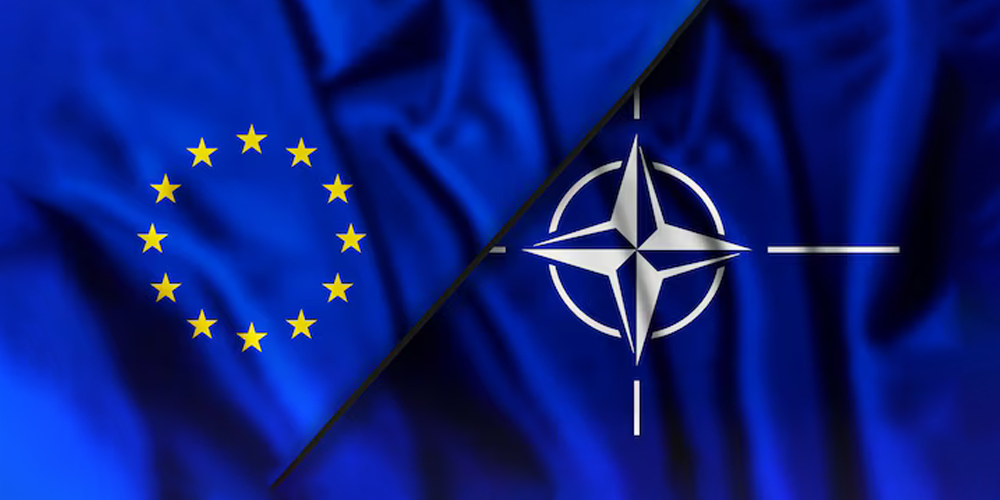


The political and economic space in which the Irish state operates is increasingly shaped by the growing inter-imperialist contradictions within the NATO/EU bloc, which is itself a manifestation of the general crisis of capitalism. The tensions over Greenland are not an aberration but the latest symptom of a systemic process in which the dominant faction of the US monopoly capitalist class is using Trump as a means to arrest its relative global decline. The doctrine of “America First” is a declaration that the material interests of the US ruling class will now be pursued with brutal disregard for its traditional junior partners, potentially fracturing the very Atlanticist alliance upon which the post-war order was built.
The imperialist stage of capitalism is defined by rivalry between monopolies and the capitalist states that represent them. Since 1945, the British and European bourgeoisies accepted a subordinate role within a US-dominated hierarchy. The “rules-based international order” was the mechanism through which they accessed markets and stability. The US used its military to ensure its hegemony, but this was directed against countries outside “the international community.”
The shock now reverberating through the political and media establishments in London and Brussels stems from the realisation that they too can be treated as vassals. The policies of the Trump administration have removed the ideological veneer of being equal partners with US imperialism. Even if the Greenland issue is resolved, the structural tension is permanent. As US state monopoly capitalism fights its decline, it will increasingly treat the EU and UK not as allies but as competitors, intensifying the bloc’s internal contradictions.
The Irish ruling class is in a state of panic. Their economic model and political project depend on stability within the bloc. Brexit was disruptive, but the potential fracture of the Atlantic bloc itself represents a greater threat. Maintaining good relations with the three imperialist centres is central to their survival as a ruling class. A genuine rupture between these centres would narrow its room for manoeuvre, exposing its dependency and lack of sovereign economic foundation.
The Irish state’s attempts to navigate this turmoil reveal its core contradiction. In his non-condemnation of the US assault on Venezuela, Taoiseach Micheál Martin called for conflict resolution through the UN framework. This could appear as a principled commitment to multilateralism. This position is likely to be the Irish government’s response as intra-bloc tensions rise.
However, this rhetoric is contradicted by the government’s policy of dismantling the “Triple Lock” mechanism, which requires a UN Security Council Resolution for significant overseas troop deployments. This move exposes the actual class character of the state’s foreign policy. To remove this lock is to consciously uncouple Irish military policy from the UN Charter, thereby accepting and facilitating a world order where US imperialism can act unilaterally. The verbal support for the UN is ideological cover; the practical alignment is with the imperialist Atlantic alliance, irrespective of its internal fractures. It is a bid to retain favour with a US that increasingly rejects multilateral constraints.
Furthermore, the Greenland crisis has provided a new front for those forces who wish to erode Irish neutrality. As the US discards the pretence of Atlantic partnership, sections of the EU bourgeoisie and their supporters in Ireland increasingly advocate for deeper EU political integration and a “European Army.” This project is sold under the banner of “European sovereignty” and solidarity against Trumpian unilateralism.
This is a deliberate and cynical manipulation. Widespread popular abhorrence at US aggression and threats against Venezuela, Cuba, Iran, Greenland, and others is being harnessed to create a false consciousness of a progressive “European” alternative. This is reminiscent of John Redmond’s appeal in 1914, which urged Irishmen to sacrifice themselves for an empire that would soon unleash the Black and Tans upon them. The working class is again being urged to shed its blood for an alien ruling class’s interests.
The Irish people owe no allegiance to any imperialist power. Foreign capital resides in Ireland for one reason: the super-exploitation of labour and the extraction of profit, facilitated by a servile state and low corporate taxes. Its presence is a testament to dependency, not benevolence.
The task for socialists is not to choose between Washington and Brussels. The task is to build an independent, internationalist class politics. This means, firstly, unmasking the bourgeois campaign to destroy neutrality as a drive for deeper imperialist integration. Secondly, defending and radicalising the principle of neutrality as a platform for anti-imperialist solidarity, opposing all military alliances and wars of plunder. Finally, organising the working class to challenge the capitalist model itself, which ties us to imperialism. The crisis of imperialism creates not only dangers but also opportunities to break the ideological chains of Atlanticism.