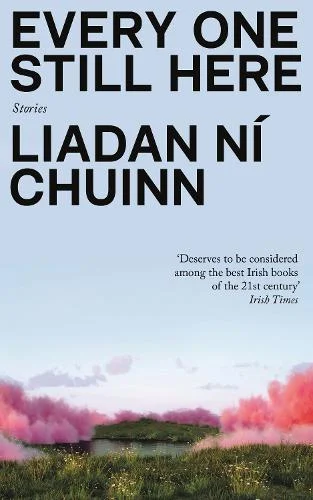



Liadán Ní Chuinn’s stunning short story collection is a courageous, unflinching diagnosis of an open wound. That wound is the legacy of the conflict in the British-occupied Six Counties. Ní Chuinn’s genius is to move beyond the strictly political to explore its precise, cellular-level damage within the nationalist community—how state violence and colonial injustice metastasise into intergenerational trauma, dysfunction, and a failure of language that cripples the present. This is not fiction about the Troubles; it is fiction about their endless, haunting aftermath, etched into the body and psyche of an oppressed people.
The collection’s power derives from its relentless focus on the body as the primary site of conflict. The political violence is historical fact. Ní Chuinn shows how this historical trauma replicates itself in intimate, physical ways. We see it in the debilitating chronic pain that racks the mother in Amalur, a pain so total it becomes her identity. We see it in John’s drug-induced paralysis in Daisy Hill, a body literally breaking under the weight of grief it can no longer bear. The psyche’s unprocessed trauma manifests itself physically, over and over again.
This suffering is inextricably linked to the collection’s second leitmotif: the intergenerational transmission of trauma. Ní Chuinn constructs a haunting genealogy of silence and pain. The older generation in almost every story clings to corrosive silence as a survival mechanism. This failure to process and communicate—a classic symptom of trauma—becomes a festering poison that destroys them and perpetuates dysfunction within their families and communities.
Dysfunction and an inability to communicate are at the collection’s heartbreaking core. Parents and children frequently cannot hear one another. Conversations are minefields of misunderstanding, deflection, and unexpressed agony. In Novena, a mother’s attempt to confess a past wrongdoing to her daughter merely deepens the chasm between them. In another story, a father can only express his love through silent companionship, asleep beside his baby son. In Amalur, even seemingly intact families cannot articulate abusive behaviour. In Daisy Hill, the crucial car argument between cousins Rowan and Shane brings this failure to a head: one seeks historical truth as an explanation for their familial pain, the other dismisses it as irrelevant “history”.
Yet, for all its stark portrayal of damage, the collection goes beyond cataloguing despair. Amidst the weight of inheritance, Ní Chuinn’s characters—particularly the women—engage in a quiet, often desperate, struggle to find a way forward. The writer in Mary wrestles with fragmented memory and form, attempting to master her past through narrative and assert authorship over her own story. Tara, in Novena, through her deluded projection of an idealised online identity, is driven by a profound yearning for an alternative reality. These struggles become a form of hope, evidence of a spirit fighting to heal the open wound through acts of survival.
These struggles are framed by the collection’s potent political thesis: this trauma grows from the state violence and continuing injustice experienced by the nationalist population under British rule. Ní Chuinn is masterful in showing how the political is devastatingly personal. The injustice is not just historical; it is the ongoing protection of perpetrators, the sealing of files until all witnesses are dead, the political rhetoric that recasts soldiers as victims. This continuous denial of justice and truth prevents healing, ensuring the wound remains open and raw, forever re-infected.
This is where the two writer figures—the woman in Mary and Rowan in Daisy Hill—represent two distinct, yet complementary, strategies for confronting this legacy. The woman is engaged in the intimate, internal struggle to articulate a selfhood after trauma. Rowan, by contrast, has moved beyond describing the internal “manifestations of trauma”; instead, he performs a radical act of testimony by simply naming the victims and the root cause: British state violence and its enduring, corrosive indifference. His writing is not about understanding the trauma for himself; it is about forcing the world to acknowledge the crime.
This progression—from the internal processing of damage to the external assignment of responsibility—gives the collection its powerful arc. It argues that true healing cannot begin with mere personal resilience; it must be preceded by a full and truthful accounting of the historical and political facts—an end to the culture of impunity for the colonial state.
Furthermore, by detailing these mechanisms with such precision, Ní Chuinn’s work transcends its specific context to become a testament to the experience of suppressed peoples living with the legacy of colonialism and imperialism worldwide. The “open wound” she diagnoses is recognisable in communities across the globe that have endured the same patterns of violence, partition, and historical denial.
Ní Chuinn appropriately and poignantly weaves into this reflection a poem by Palestinian-US author Naomi Shihab Nye and the Irish language poetry of Gearóid Mac Lochlainn. These inclusions add a significant dimension, expanding the scope into a transnational solidarity with other oppressed nations. The importance of the Irish language in this act of cultural resistance is underlined by the author’s choice of pseudonym and her use of Irish in the acknowledgements.
Finally, and intrinsically linked to this, the collection serves as an essential call for a class-conscious, all-Ireland awareness. It challenges the 26-County state to fully acknowledge its own northern shadow and the shared legacy of a colonial past that has not vanished. The trauma and dysfunction depicted are not a peculiarity of the North but the direct inheritance of a history that shaped the whole island. Ní Chuinn’s work insists that to understand the present, on both sides of the imperialist border, one must confront this legacy with unflinching honesty. It is an indispensable contribution to the national conversation, a difficult, essential, and unforgettable read that illuminates a persistent pain and insists, fiercely, on the necessity of a political as well as a personal reckoning.