

Pundits estimate there are somewhere between 50 and 80 million Irish people around the world.
Our 17th-century ancestors rebelled against plantation owners in the Caribbean, only to then shape racialist police departments across the USA. We spread the fiddle, the Pope and the craic as far as the Guinness family’s extortionate wealth would take us. We fed the Queen’s factories, armies and shipyards, and in the sobering light of the genocide in Gaza, we often built railways, canals and cities on occupied land.
But what if our interest in new cultures didn’t have to play a part in colonial plunder? What if we weren’t just a pale-skinned tool to populate black and brown land?
As the polarity of power on the planet changes, more and more Irish people are heading east.
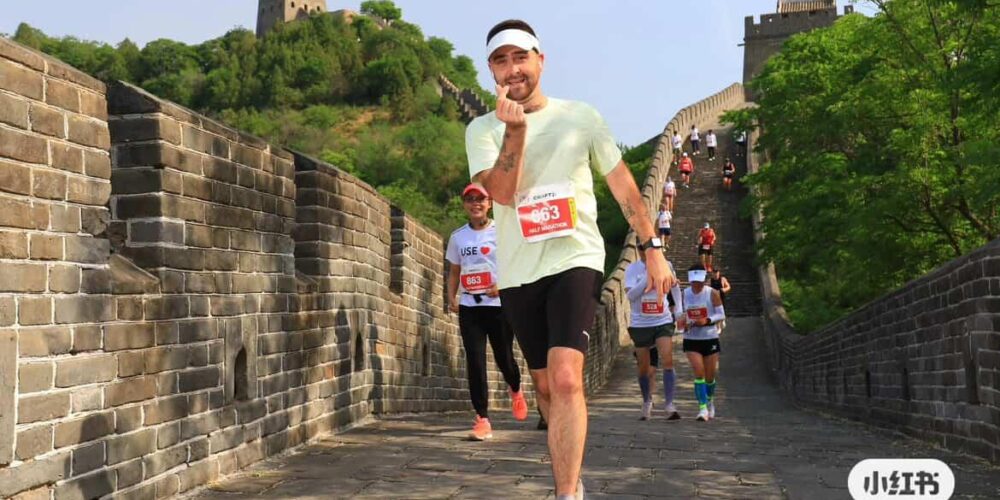
In 2019, James made the move from the great city of Cork, with a population of 224,000 people, to a megacity of 21 million, one of the most populous on earth.
“The sheer size is the number one thing,” James explained. “Beijing’s administrative region is the size of Munster in Ireland. The convenience of Beijing is insane. Everything can be delivered to your door, from a new kitchen chair to a coffee, within about 30 minutes.”
No doubt an intimidating change; to ease in, he was “plonked” into a rural town 50km outside the capital as part of a work scheme. “Many people move to tier-1 Chinese cities like Shanghai or Beijing and exist entirely in an ‘expat’/foreigner bubble – going to western bars, eating western food and only speaking to other foreigners. I was forced to communicate as best I could, with no other English speakers around. It was a great way to get involved in the culture.”
While you’ll have no problem finding an Irish pub almost anywhere in the world, James highlighted a significant change in how Chinese people socialise compared to home. “In China, the street and the park are the third space. Elderly people have rich lives, spent playing mahjong and cards on benches outside, practising musical instruments and singing with personal karaoke machines.”
“On the other hand, younger Chinese people often do not have any time at all to exist in a third space. The older you get, the more sociable you are, the more vibrant your daily life is. It’s quite different from back home.”
While Beijing’s “outdoor dining, pinting [sic] and cafe scene is lacking majorly compared to Cork,” James, who DJs under the name Numbertheory, claims that techno with Chinese characteristics rivals anything playing in Irish clubs. “I maintain that 2015–2019 China was the epicentre of cutting-edge dance music worldwide. With the gigantic population, even if a small percentage of people are into something, a scene can prosper. The scene is very Chinese. You’ll have grime with Chinese traditional music mixed in, Beijing opera with techno beats, etc. It’s diverse, but it retains its Chineseness.”
For anyone curious, James recommended getting to know the following Chinese artists: 33EMYBW, Bloodz Boi, Hyph11e, Night Swimmer, Cola Ren, Yikii and Jackzebra.
Before his departure, James was no stranger to political activism. He ran Palestine fundraisers and a variety of local campaigns against the state – pastimes that have had to take a back seat since the move.
“In China, things get done. It’s a function of their ‘Socialism with Chinese characteristics’ and ‘whole-process people’s democracy’ model. Beijing changes its face constantly. Houses go up within months. Positive changes get implemented.”
“Unfortunately, this goes both ways. The healthy political discourse in Ireland, where people voice their opinions in private and in public and can visibly and loudly oppose their government, is something I miss. The efficient, meritocratic and technocratic mode of governance in China can be rigid and inflexible, and public participation is limited.”
James went from communist activism in the Connolly Youth Movement to a thriving country run by a communist party which he “ostensibly admired”. Now with a bit of Mandarin under his belt, he’s certain he’s picked the right path in an uncertain future.
“It taught me that I can adapt. I speak fairly good Chinese now; I use it daily in my job. I never imagined I’d be able to do that, which bodes well for any future adaptations I’ll have to make as the world rapidly changes.”