

It’s a question asked by many working people. The US establishment already has access to Greenland’s rich natural resources, and NATO already has a number of bases there. The Danish establishment was happy with its subordinate relationship with the US and willing to allow the US to expand its military footprint and assert greater control over Arctic shipping lanes. All this could be, and no doubt will be, negotiated. The Danish state is a strong and committed member of NATO and its global strategies of domination.
For US monopoly capitalism, through its national-security strategy, is driven by the need for long-term confrontation with China and anyone else it sees as a threat to its global hegemony. Its strategy is about determining how the 21st century is shaped and controlled; this can only be secured by controlling and dominating land, resources, and shipping lanes.
Greenland has now become a site of struggle, as the impact of global climate change—resulting in shrinking sea ice—has opened up these once-closed sea lanes, making them important to global logistics. It is also a rich source of critical minerals and rare earth metals, materials essential to today’s modern technology. China currently accounts for around 70 percent of global rare earth mining and 90 percent of its processing – a tremendous strategic asset that has already proven its value as a lever in responding to the US’s tariff war. When China blocked the export of rare earth metals, the US had to back down on its tariff strategy. So the US has learned from that lesson.
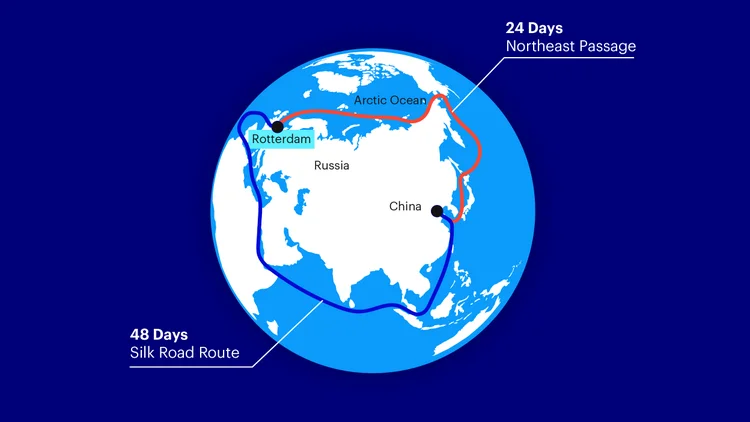
In 2017, China proposed including Arctic routes in the Belt and Road Initiative (BRI), creating a “Polar Silk Road” in collaboration with Russia. Building a maritime route linking the major ports on China’s eastern seaboard to northern Europe via the Arctic could well reduce transit times by up to 30 percent compared to using the Suez Canal.
Controlling this emerging Arctic corridor is a central concern for Washington and Western imperialism, critical to its strategy to control and restrict the growth of China. It also gives them the possibility to control chokepoints and enforce blockades in any future conflict with China. We only have to look at the US approach to who should own and control the Panama Canal, or the current US naval blockade of Venezuela.
Securing Greenland’s mineral wealth would ensure diversification of the supply chains of such critical minerals and reduce dependence on Chinese sources. US imperialism is mounting a multi-faceted counter-offensive against countries politically, economically, financially, and militarily. Controlling Greenland is part of that strategy.
The EU has clearly been put in its place, assigned a very subordinate role to the needs of US monopoly capitalism.
The destiny of Greenland must be determined by its people, not by negotiation between the colonial and imperialist powers.