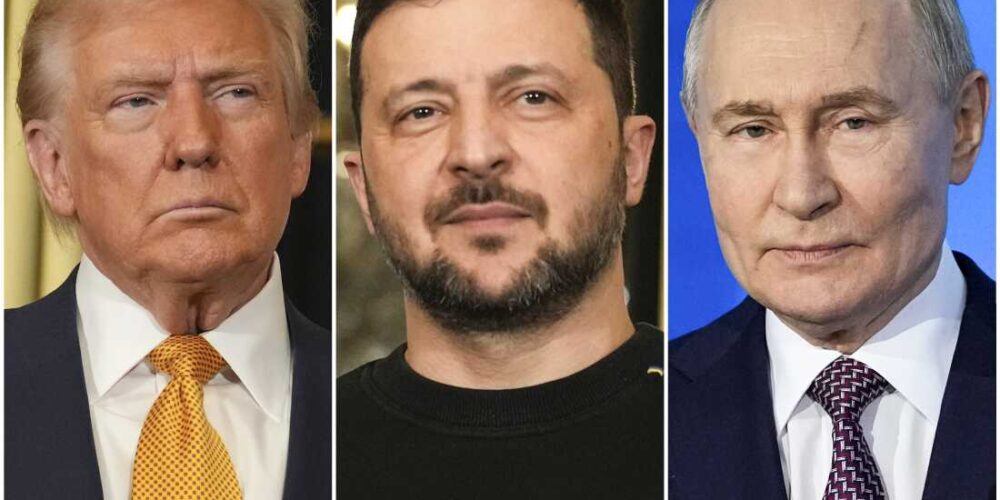


Donal Trump remains as unpredictable as ever and never more so than with his latest pronouncement on the conflict between Russia and Ukraine. Just when Europe’s leading advocates of endless war were anticipating increased US participation in the conflict on behalf of the Kiev regime, Trump disappointed them. The Whitehouse issued a statement indicating that it wanted an end to hostilities and according to widely leaked reports, on terms deemed favourable to Russia.
As always, it’s impossible to discern Trump’s reasoning for the surprise announcement. Nevertheless, his call has been issued with sufficient authority to have caused Zelenskyy to react cautiously and agree to participate in ceasefire discussions with the American envoy.
Although the proposed peace terms, if enacted, would seem to favour Moscow, this would in all likelihood, simply be a recognition of current realities on the battlefield. Ukraine is facing enormous recruitment difficulties and is losing ground before a slow but relentless Russian advance. Short of direct outside military intervention on behalf of Kiev, the outcome seems inevitable.
In effect, therefore, the Trump intervention may well be a pragmatic decision to influence the end result while his administration still has the political leverage to do so. Whatever the US thinking behind this latest play, the initiative has not met with the approval of all Europe’s leaders. Within hours of the Washington missive going public the German, French and British leaders; Merz, Macron and Starmer were convening a crisis get-together on the fringes of the G20 conference in South Africa.
While reluctant to confront Trump directly, the three leading members of the so-called ‘Coalition of the Willing’ said the US proposal required more ‘work’ and pledged their ongoing and uncritical support for Ukraine. Along with EU Commission president Ursula von der Leyen’s bellicose, ‘not an inch’ statement, it is clear that maintaining the conflict is firmly on their agenda.
Of note is the fact that the British Prime minister is facing a dire domestic political environment threatening his grip on office. Starmer’s failings are too numerous to list. Consequently, his personal popularity has reached a record low of -45 with many of his MPs talking openly of opting for a different leader. Faced with the real possibility of losing power, might Starmer be tempted to use his role as chair of the coalition to provoke a conflict with Russia in the hope of repeating a Thatcher-like Malvinas career saving manoeuvre?
While Starmer’s thinking remains conjecture there are other, concrete factors to take into
account. There is evidence aplenty pointing towards a threatening scenario. There is, for one thing, the increasing expenditure on armaments in many Western European countries.
In 2024, for example, EU member states’ defence expenditure reached €343 billion, rising for the 10th consecutive year. In 2025, it is expected to reach an estimated €381 billion. Defence expenditure in 2024 increased by 19% compared to the previous year and by 37% compared to 2021.
Then we have tension, manufactured or genuine, arising from continuing reports of what we are asked to believe is underhand and or menacing Russian behaviour.
Over recent months many media outlets carried endless accounts of drones flying dangerously over a number of European airports causing major disruption to flight schedules. The Kremlin is routinely blamed, albeit with no evidence to substantiate the claims. Interestingly too, the RAF has offered to assist ‘Gallant little Belgium’ deal with the alleged threat.
Paranoia was further increased last month when Britain’s secretary of defence John Healey created another Russia scare. In a rare, televised press briefing, he claimed that a Russian ship, Yantar, was about to enter British territorial waters with the possible intention of damaging undersea communication cables. Healey finished with a belligerent statement that the UK had, ‘… military options ready should the Yantar change course
Reason aplenty, therefore, to be concerned and not only in an academic sense. It has to be recognised that the Republic of Ireland is moving perilously close to becoming embedded in this dangerous exercise. Abandoning any pretext of neutrality, both the Taoiseach and Minister for Foreign Affairs have accepted the EU’s aggressive position, that of effectively rejecting any compromise to secure peace. Moreover, it is reported that the Irish government has been represented at various ‘Coalition of the Willing’ summit meetings.
Taken together with its declared aim of ending the Triple Lock, there is every reason to fear that the current Dublin government is contemplating entering any conflict engineered by the war mongering coalition. We must, however, continue to work to prevent this happening. The recent election of Catherine Connolly points to the fact that there remains large popular support for neutrality.
No to any Dail endorsed coalition of the willing warmongers. No to a 21st century Woodenbridge moment.