

Twenty-first-century imperialism can no longer rely on classic colonialism to transfer surplus from the Global South to the Global North. Instead, neoliberalism offshores production to low-wage countries, manufacturing commodities at lower costs by pushing wages below subsistence levels. This model requires sustained poverty in the Global South as a fundamental precondition for capital accumulation. It is against this bleak backdrop that the eradication of absolute poverty in the Indian state of Kerala must be understood—not as a statistical anomaly, but as a political achievement.
After a century of humiliation by imperialist powers, China’s revolution in 1949 and India’s independence from Britain in 1947 created two different paths. While both started from extreme poverty, China has since lifted over 800 million people from abject poverty, a feat unmatched in scale. India, on the other hand, still has a long way to go. Yet, at India’s southern tip, Kerala—a state of 36 million people—has provided a third way: a left alternative that serves as an inspiration for all societies striving to guarantee basic human needs like food, housing, and healthcare.
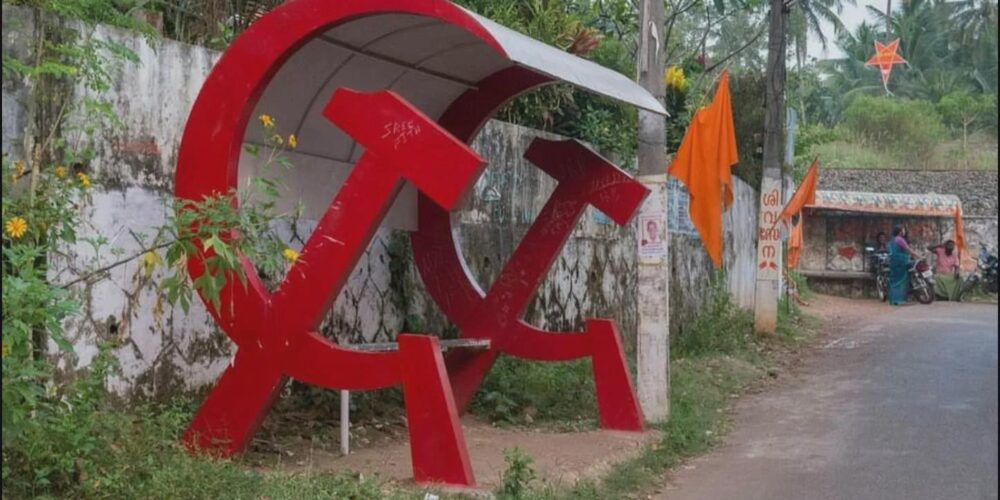
On November 1, 2025—the anniversary of the state’s formation—Kerala announced the eradication of extreme poverty. This was the culmination of a protracted political process that began in 1957, when a communist party first came to power through bourgeois elections. That government initiated radical land reforms, expropriating excess land from feudal landlords and distributing it to the landless. This broke the backbone of feudal relations, created a rural middle class, and provided the foundation for Kerala to become India’s most literate state. It is also the first state to achieve full digital literacy and the first in the world to declare internet access a birthright.
Kerala’s robust public healthcare system gained global attention during the COVID-19 pandemic, outperforming even developed nations like the United States in its effective crisis management.
Although the Multidimensional Poverty Index (MPI) already showed Kerala had the lowest rate of extreme poverty in India (0.7%), the state launched a targeted campaign to eliminate it entirely. This was a grassroots, micro-planning effort involving 1.4 million volunteers, who identified 103,099 individuals across 64,006 families living in extreme poverty. Using 12 parameters—including food security, healthcare, housing, and employment—the government implemented tailored support, including pensions to prevent people from falling back into poverty.
This achievement stands in stark contrast to the neoliberal doctrine of TINA—”There Is No Alternative”—which followed the fall of the Soviet Union. History is littered with examples of governments that attempted to prioritize people’s welfare only to be sabotaged in the name of ‘preserving democracy,’ from Chile and Burkina Faso to Brazil and Venezuela. Kerala itself faced this imperialist reaction; its first elected left government was toppled by CIA intervention in 1959, a history documented in the book Toppling The First Ministry, available at Connolly Books.
Despite such pressures, the persistence of the left project in Kerala is evident in its material gains. Over the past decade, the Left government has built 500,000 houses through its ‘Life Mission’ project and provided land to 400,000 families. Kerala’s infant mortality rate stands at 5 per 1,000 live births, lower than the U.S. rate of 5.9, despite Kerala’s per capita income being only one-tenth that of the United States.
Furthermore, Kerala stands at the forefront of the ideological battle against the rising threat of the fascist RSS, a poisonous ideology built on hatred for minorities and servility to monopoly capital.
In a neoliberal world where wealth creation and economic inequality are two sides of the same coin, Kerala prioritizes wealth distribution and the democratization of development. Capitalism is excellent at developing the forces of production, but it does so for profit, not to improve human life. Under capitalism, goods and services are subject to an exchange-value system that renders even the greatest inventions inaccessible to millions. The solution is to move toward a superior system of distribution where the necessities of life are accessible to all, and social progress is measured by the improvement in living standards for the entire working class.
Kerala demonstrates that the left is not merely an opposition force, but a viable governing alternative. It proves that even within the constraints of a capitalist nation, a committed left movement can deliver tangible victories for the working class and poor. The task ahead is to defend these gains, learn from their strategies, and replicate their success on a global scale.