

At the end of December 2025, the Irish state signed off on a new fisheries agreement with the EU Fisheries Council. It will result in an estimated €94 million in losses for the Irish fishing industry in 2026.
The deal reduces Ireland’s fishing quota by 57,000 tonnes. Over 2,300 jobs in coastal communities face immediate danger, with the wider economic impact potentially reaching €200 million. Coastal communities like Killybegs, Castletownbere, and Howth could be decimated.
For fifty years, Ireland benefited from the ‘Hague Preference,’ an insurance mechanism created in 1976 to prevent extreme quota cuts for highly dependent fishing nations. This protection has now been blocked by other Member States. Since joining the EEC/EU, Ireland’s fishing grounds have provided rich profits for foreign fleets, which have devastated fish stocks.
The latest agreement will see the Killybegs fishing fleet, for example, limited to 14–20 days of fishing per year with a minuscule quota.
Aodh O’Donnell of the Irish Fish Producers Organisation (IFPO) stated: “The consequences will be catastrophic. The EU has failed Ireland’s fishing industry repeatedly. This latest failure means utter devastation… It’s symptomatic of a fundamentally unfair system where large Member States and big business dictate what happens to the Irish fishing industry.”
Brendan Byrne of the Irish Fish Processors and Exporters (IFPEA) warned that processing plants now face a huge threat: “They cannot survive without supply. Less quota means less fish and less work. Many plants may not survive this blow.”
The inequality is stark. In 2026, Irish vessels will be left with just 28 tonnes of sole to catch on the south coast, while Belgium has been allocated 450 tonnes.
The EU Fisheries Council sets catch limits, known as Total Allowable Catches (TACs), based on independent scientific advice. In early October, the International Council for the Exploration of the Seas (ICES) issued a grave warning.
ICES reported that unilateral mackerel quotas have exceeded scientific advice by an average of 39% since 2010, putting spawning stock under significant pressure. To ensure sustainability, ICES recommended for 2026 a 70% reduction in the EU’s mackerel quota, a 41% reduction in blue whiting, and a 22% reduction in boarfish.
As a result, Ireland’s mackerel catch will be reduced from 100,000 tonnes in 2014 to just 11,000 tonnes in 2026. These stocks have been devastated by overfishing from larger EU fleets and non-EU states like Norway and Russia.
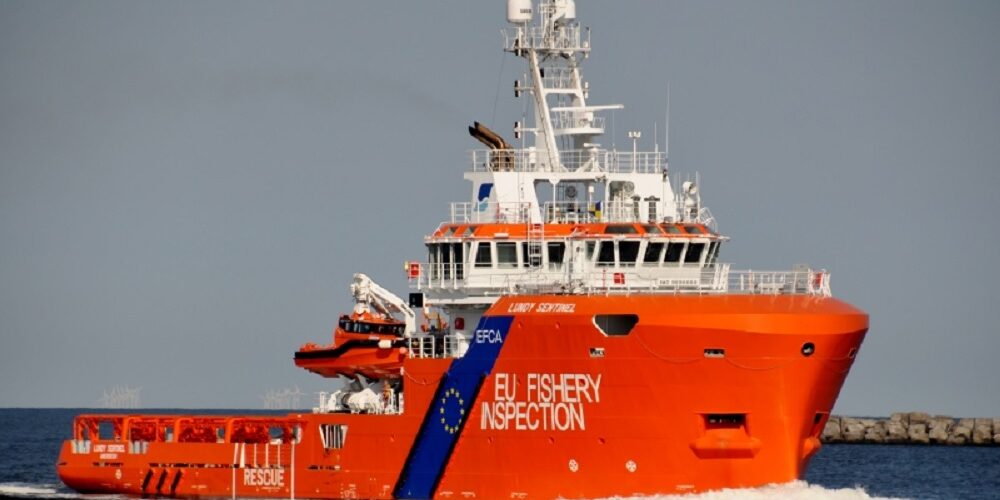
If we are to sustain fish stocks, the Irish state must protect them from overfishing by national corporate fleets, EU fleets, and non-EU fleets. This would require greater investment in a fishery protection fleet. There is a far greater threat to the livelihoods of thousands of workers from this overfishing than from the supposed threat of Russia or China cutting undersea cables.
The Irish state has long abandoned the fishing industry and its dependent coastal communities to the EU. Corporate control of resources is not sustainable. A properly managed, sustainable fishing industry controlled and managed by an Irish state is the only way forward.