Among the rapid peace deals on the outgoing U.S. president’s agenda is an imposed “reconciliation” between Morocco and Algeria. Compared to the flashpoints in Ukraine and Gaza, their conflict has so far been fought through propaganda, not military means.
In Western Sahara, the only recurring hostilities are pinprick attacks by the Algeria-backed Polisario Front. These acts of resistance target Morocco’s, and initially Mauritania’s illegal occupation of the territory since 1975—a breach of international law. The annexation doubled the realm of King Mohammed VI, enabling the extraction of valuable mineral resources, often with European corporate partners. This land grab is maintained by the presence of 100,000 Moroccan soldiers.
Curbing Russian Influence: An Imperial Priority
For U.S. imperialism, controlling Western Sahara is strategically no less important than its projects in Ukraine or Israel. The territory forms the northwestern flank of Africa. In 1975, as Franco’s fascist regime in Spain crumbled, the new King Juan Carlos betrayed decolonisation, handing the region to Morocco and Mauritania. An independent Western Sahara could have given the Soviet Union Atlantic access via its Algerian ally. Today, blocking Russian influence from the Sahel to Central Africa remains a key U.S. objective. The Trump family’s personal business interests—plans for a luxury Riviera in the territory—add a crude, personal incentive to this imperial calculus.
On October 31, the UN Security Council adopted a resolution on Western Sahara. With eleven votes out of fourteen, it for the first time proposed Rabat’s long-demanded 2007 autonomy plan as a possible basis for negotiations. This triggered euphoria in Morocco. The king hailed a “historic turning point” for recognising the “Moroccan identity” of the Sahara. Monarchist media falsely declared the resolution a legal recognition of Moroccan sovereignty, claiming the Polisario was now “meaningless” and that continued Algerian support would “violate international law.”
Algeria, a current Security Council member, boycotted the vote. Its government stated that Morocco’s only negotiating partner must be the Polisario’s provisional government, which many states recognise. Even before the predictable vote, this government signalled readiness for talks but insisted the Sahrawi people’s right to self-determination is non-negotiable.
The resolution results from years of lobbying by Morocco and its former colonial power, France, latterly joined by Donald Trump. During his first term, Trump backed the autonomy “solution,” extorting Morocco’s normalisation of relations with Israel in exchange. The will of the Sahrawi people—now estimated at 700,000, with roughly 200,000 in Morocco and 200,000 in refugee camps in Algeria—was treated as irrelevant.
To these refugees, Mohammed VI offers a “homecoming.” Acceptance would make them subjects of a monarch who denies them any share in their homeland’s wealth. Legally, the king owns the major corporations that extract and process Western Sahara’s rich phosphate deposits.
Contested for a week in the Council, the resolution does not enshrine autonomy but merely proposes it as one negotiating basis. The UN cannot create states or draw borders; such decisions require referendums. For Western Sahara, this means a vote among the people—and their descendants—who inhabited the territory in 1975 at Spain’s withdrawal. Accordingly, the resolution extended the mandate of MINURSO, the UN mission stationed there since 1991. Its purpose is to organise that vote—a task sabotaged for decades by Moroccan obstruction. Rabat will only agree if Moroccan settlers in the territory can also participate. Russia, China, and Pakistan abstained but, unlike Algeria, did not boycott, seeking to ensure MINURSO’s continuation.
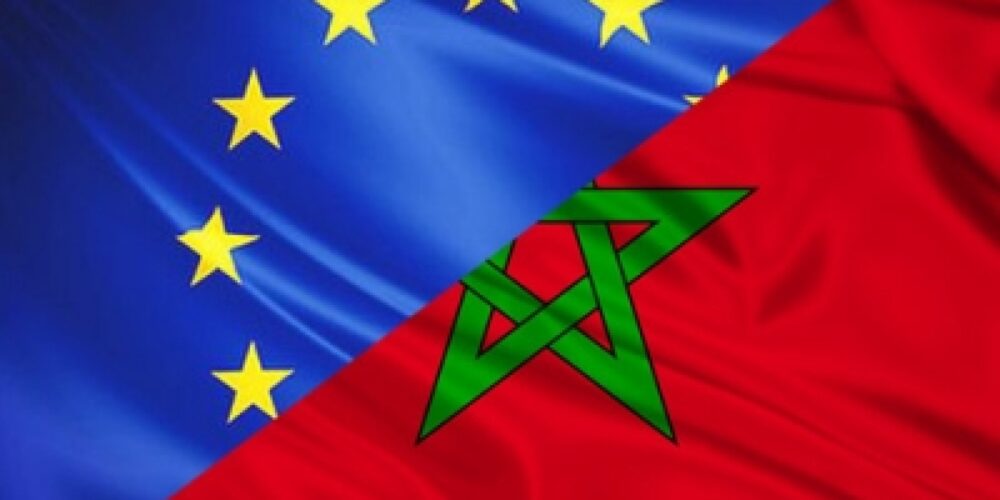
The EU—led by France—pays only lip service to international law regarding Western Sahara, actively undermining it through economic activity in the occupied territory. Maghreb analyst Adnan Abdoun notes one reason for deteriorating EU-Algeria relations: Algeria’s 45 million people represent a large market, but the country uses its economic strength to boost domestic production, not imports. Morocco, in contrast, remains a committed free-trade client state. This is why Emmanuel Macron joined Trump in recognising the “Moroccanness” of Western Sahara, siding with capital over international law and the Sahrawi people’s right to determine their own future.